Have you ever wondered how your laundry detergent manages to get that stubborn grease stain out of your favorite polyester shirt, or why your white towels don't turn grey after dozens of washes? The secret lies in a high-tech "tug-of-war" happening inside your washing machine, and the players are undergoing a major green makeover.
The Invisible Bodyguards of Your Clothes
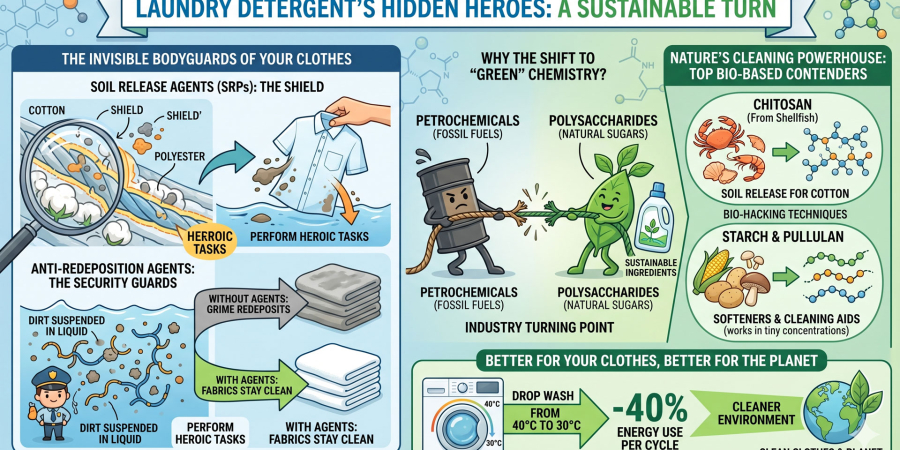
Modern detergents aren't just about soap and bubbles. They rely on specialized molecules called polymers that perform two heroic tasks:
Soil Release Agents (SRPs): These act like a "shield" for your clothes. They coat the fibers (especially synthetics like polyester) so that oil and dirt can’t stick. When you wash the garment, the dirt simply slides off.
Anti-Redeposition Agents: Once the dirt is in the water, these molecules act like "security guards," keeping the grime suspended in the liquid so it doesn't settle back onto your clean fabrics.
Why the Shift to "Green" Chemistry?
For decades, these hard-working ingredients have been made from fossil fuels (petrochemicals). However, the industry is reaching a turning point. Consumers want sustainable products, and manufacturers are racing to reduce their carbon footprints.
The solution? Polysaccharides—natural, renewable sugars found in plants, fungi, and even seashells.
Nature's Cleaning Powerhouse
Scientists are now using "bio-hacking" techniques to turn natural fibers into laundry superstars. Here are the top contenders:Chitosan (From Shellfish): Extracted from the shells of shrimp and crabs, modified chitosan is showing great promise as a sustainable way to release soil from cotton fabrics.
Starch & Pullulan: Beyond just being food, these can be modified to act as fabric softeners and cleaning aids that work even in tiny concentrations.
Better for Your Clothes, Better for the Planet
This isn't just about being "eco-friendly"—it’s about performance. These bio-based ingredients allow us to wash clothes effectively at lower temperatures. Dropping your wash from 40°C to 30°C can reduce energy use by a massive 40% per cycle.
The Bottom Line: The next time you do a load of laundry, there’s a good chance that plant-based science is doing the heavy lifting. By switching from oil-based chemicals to modified sugars, we’re moving toward a future where "clean" refers to both your clothes and the environment.